
Do Moisture-Wicking Shirts Really Work? A 2026 Guide
Last Updated: October 23, 2026
Quick Summary
Yes, moisture-wicking shirts really work, but not by absorbing sweat. They use capillary action to pull sweat away from your skin and spread it across the fabric so it evaporates faster. Wicking only cools you fully when airflow carries that moisture away.
Cotton absorbs and holds sweat against your skin, while moisture-wicking fabric spreads and releases it to dry faster.
Polyester dries fast but holds odor, merino wool resists odor but dries slower, and blends balance the trade-offs.
Wicking stalls in high humidity and still air, so pair a wicking shirt with a fan or airflow.
Wash in cold water with half the usual detergent and never use fabric softener, which blocks capillary action.
Test a shirt by spraying equal water on each, weighing every 5 minutes, and timing the return to dry weight.
Table of Contents
How Moisture-Wicking Shirts Actually Move Sweat
Capillary Action and Fiber Chemistry, Explained Simply
Moisture Wicking Fabric vs Cotton for Workouts: The Real Difference
What the Best Moisture-Wicking Fabric Gets Right
Polyester, Merino Wool, Nylon, and Blends Compared
Treated Fabrics and Finishes
Matching Fabric to Your Activity and Climate
When Wicking Does Not Keep You Cool
Why Moisture-Wicking Shirts Smell (and How to Stop It)
How to Wash Moisture-Wicking Shirts So They Last
How to Test a Moisture-Wicking Shirt Before You Commit
The Controlled Side-by-Side Test
What the Numbers Tell You
The Simple Water-Spread Check (No Scale Needed)
Why This Test Beats Marketing Claims
Frequently Asked Questions
How Moisture-Wicking Shirts Actually Move Sweat
Yes, moisture-wicking shirts really work, but not in the way most marketing suggests. They do not absorb sweat.
Below, we break down the science in plain terms, show where wicking fails, and give you a way to test any shirt before you commit.

Capillary Action and Fiber Chemistry, Explained Simply
Capillary action is the process where liquid moves through narrow spaces in a material without help from gravity. In a shirt, tiny gaps between fibers pull sweat away from your skin and spread it across a wider area.
Two fiber properties drive this:
Hydrophobic fibers repel water. Polyester is the classic example. It pushes sweat toward the fabric surface.
Hydrophilic fibers attract water. Cotton and merino wool absorb it.
The trick in performance apparel is combining both. A hydrophobic inner layer moves sweat out, and a hydrophilic outer layer spreads it for evaporation. Fabric engineers call this a "push-pull" construction.
Moisture Wicking Fabric vs Cotton for Workouts: The Real Difference
Cotton holds sweat against your skin. That is the core problem. A cotton tee can absorb a large amount of moisture relative to its weight, and it releases that moisture slowly.
Moisture-wicking fabric behaves differently. It spreads sweat across the surface and lets airflow carry it away. The result is a shirt that feels lighter and dries faster.
Here is the practical comparison:
Factor | Cotton | Moisture-Wicking Fabric |
Sweat handling | Absorbs and holds | Spreads and releases |
Drying speed | Slow | Fast |
Feel when wet | Heavy, sticky | Lighter, less cling |
Best use | Low-sweat, casual wear | Training, hot weather |
For workouts, cotton is the wrong tool. It is comfortable at rest. It works against you when you sweat hard.
Watch Out Wearing cotton for high-intensity training traps moisture against your skin. That wet layer cools you fast when you stop moving and can cause chafing during long sessions.
What the Best Moisture-Wicking Fabric Gets Right
The best moisture-wicking fabric balances three things: how fast it moves sweat, how quickly it dries, and how it feels against your skin. Get one right and miss the others, and the shirt disappoints.
Hip Science
Fabric construction matters as much as fiber type. A knit with more surface area and better airflow dries faster. A dense, tight weave holds moisture longer.
Polyester, Merino Wool, Nylon, and Blends Compared
Each fiber has trade-offs. None is best at everything.
Fiber | Drying Speed | Odor Resistance | Feel | Durability | Best For |
Polyester | Fast | Low | Smooth, sometimes slick | High | High-sweat training, gym sessions |
Merino wool | Moderate | High | Soft, slightly warm | Moderate | Long sessions, travel, cool-weather layering |
Nylon | Fast | Moderate | Smooth, cool | High | Smooth feel, durability, mixed training |
Polyester blend (with odor treatment) | Fast | Moderate to high | Varies | High | Everyday training, odor-sensitive users |
Polyester moves sweat fast and dries quickly. It is cheap to produce and durable.
Merino wool regulates temperature well and resists odor naturally because the fiber structure traps odor compounds less readily than synthetics.
Nylon is strong and smooth against the skin.
Blends are where most performance shirts land. A polyester-spandex blend adds stretch and recovery.
Treated Fabrics and Finishes
Many performance shirts add a treatment on top of the fiber:
Hydrophilic finishes make the inner surface more water-attracting so sweat moves away from skin faster.
Antimicrobial treatments (often silver-based or zinc-based) slow odor-causing bacteria. They help, but they do not replace washing.
Durable water repellent (DWR) finishes are more common on outerwear than next-to-skin shirts; on a training top, a heavy DWR can actually interfere with wicking by making the surface too water-repellent.
A common approach is a polyester blend with an odor-control treatment. That gives you fast drying plus a longer fresh window. Fit Clothing uses moisture-wicking fabric with odor-control technology.
Matching Fabric to Your Activity and Climate
High-sweat gym sessions in a humid climate: choose an open-knit polyester or polyester blend with mesh panels. Prioritize drying speed and airflow over hand feel.
Long endurance sessions or travel: merino wool or a merino blend reduces odor buildup between washes and regulates temperature across changing conditions.
Mixed training and everyday wear: a nylon-polyester blend with a smooth face gives you durability and a comfortable feel without sacrificing moisture movement.
Watch Out A shirt labeled "moisture-wicking" can still underperform if the knit is too dense or the finish is too heavy. Fiber type is the starting point, not the whole story.
Key Takeaway The best fabric for you depends on your sweat level, climate, and how often you wash. Match the fiber and construction to your use case rather than chasing a single "best" material.
When Wicking Does Not Keep You Cool
Wicking fails in high humidity and low airflow. This is the part most guides skip.
Evaporation is how sweat cools you. If the air is already saturated with moisture, sweat cannot evaporate quickly, no matter how good the fabric is.
Wind and airflow do the heavy lifting. A fan, open windows, or outdoor breeze speeds evaporation and makes the fabric work as designed.
Pro Tip If your gym is humid and still, pair a wicking shirt with a fan or train near airflow. The fabric moves sweat, but the air has to carry it away for you to feel the cooling effect.
Why Moisture-Wicking Shirts Smell (and How to Stop It)
Moisture-wicking shirts smell because polyester traps body oils and odor-causing bacteria in its fibers. The same hydrophobic surface that repels water holds onto oily residue. Regular detergent does not always break that residue down, so odor builds over time.
The fix is simpler than most people think:
Wash after every workout, not every other one.
Use less detergent, not more. Excess soap leaves residue that feeds odor.
Skip fabric softener. It coats fibers and blocks wicking.
Odor-control technology helps, but care habits decide how long it lasts. A shirt treated for odor resistance still needs proper washing to hold up.
How to Wash Moisture-Wicking Shirts So They Last
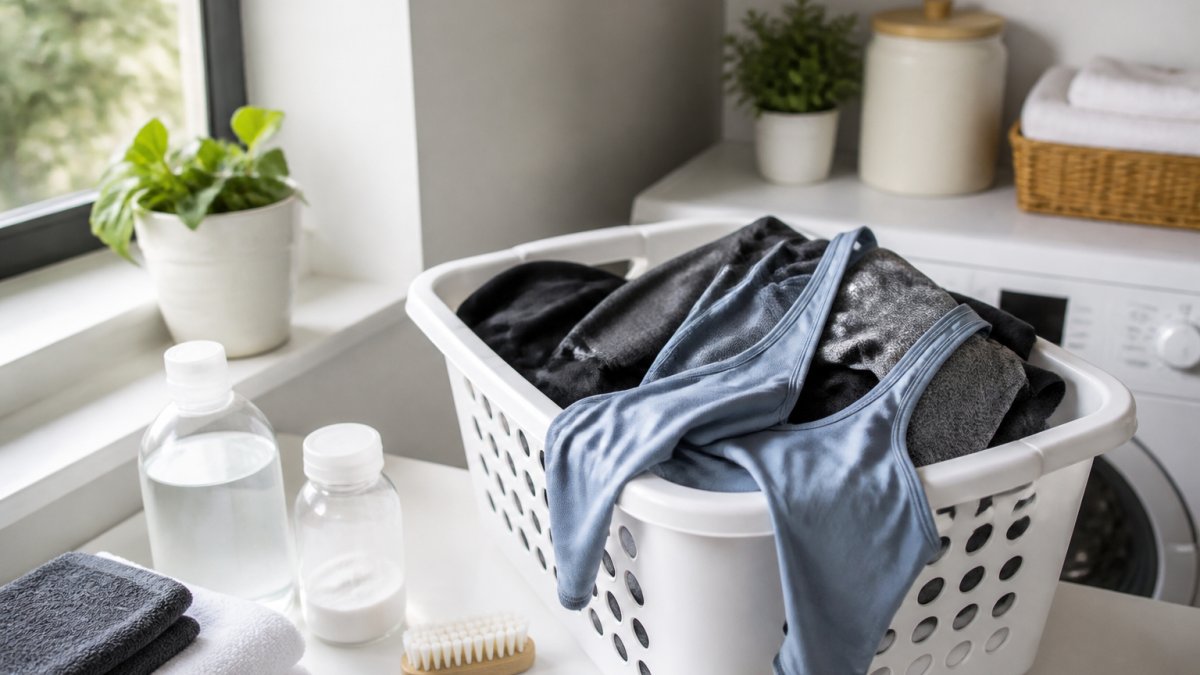
Wash moisture-wicking shirts in cold water on a gentle cycle, use a small amount of mild detergent, and skip fabric softener entirely. Then air-dry or tumble on low. That routine protects both the wicking performance and the odor treatment.
Here is the checklist we recommend:
Turn shirts inside out before washing
Use cold water, gentle cycle
Add half the usual detergent
Fabric softener is the biggest culprit. It coats fibers with a waxy film that blocks capillary action. Over time, a softener-treated shirt stops wicking and starts holding sweat.
Key Takeaway Fabric softener and dryer sheets quietly kill wicking performance. Skip them and your shirts keep moving sweat the way they were built to.
How to Test a Moisture-Wicking Shirt Before You Commit
Most guides tell you to trust the label. A better approach is to run a controlled, side-by-side test under the same conditions so you can see which shirt actually moves sweat and dries faster. You do not need a lab, just a scale, a timer, and a consistent setup.
The Controlled Side-by-Side Test
Run this test with two or more shirts at once so the comparison is fair. Keep activity, temperature, humidity, and sweat volume as consistent as you can.
What you need:
A kitchen scale that reads in grams (0.1 g resolution is ideal)
A timer or stopwatch
A spray bottle filled with water (to simulate sweat)
Step-by-step method:
Weigh each shirt dry. Record the dry weight in grams. This is your baseline.
Apply the same amount of water to each shirt. Spray 10 sprays (or a measured 10 mL) evenly across the chest panel of each shirt. Use the same distance and pattern every time.
Weigh each shirt immediately after spraying. Subtract the dry weight to confirm each shirt absorbed the same amount of moisture. If one shirt absorbed more, note it, that is already a data point about how the fabric holds water.
Hang the shirts side by side on the same rack, spaced at least 6 inches apart, in the same room. Do not put one near a fan or window and the other in a corner.
Start the timer. Check and record the weight every 5 minutes until each shirt returns to within 1-2 grams of its dry weight. That is your drying time.
Repeat the test after 5-10 washes to see whether performance holds up or declines.
What the Numbers Tell You
Faster drying time means the fabric is spreading moisture across more surface area and releasing it efficiently.
Lower retained moisture at the 10-minute mark means the shirt is not holding sweat against your skin.
A shirt that starts fast but slows after washing likely has detergent residue or fabric softener buildup blocking capillary action.
The Simple Water-Spread Check (No Scale Needed)
If you want a quick field test before buying, place a single drop of water on the inside face of the fabric (the side that touches your skin). Watch for 30 seconds:
Good wicking: the drop spreads into a wide, thin patch and begins to fade.
Poor wicking: the drop beads up and sits on the surface, or spreads very slowly.
This check will not give you drying times, but it quickly flags a shirt that will hold sweat rather than move it.
Pro Tip Test the inside face, not the outside. The inner layer is engineered to pull moisture away from your skin, so that is where the wicking action should be most visible.
Why This Test Beats Marketing Claims
Labels use terms like "moisture-wicking" and "quick-dry" without a standard definition. A controlled test under the same conditions tells you more than any hangtag. It also gives you a baseline so you can tell when a favorite shirt has lost its edge, often after repeated fabric softener use or detergent buildup.
Fit Clothing builds reinforced durability into our training tops so the fabric holds its structure and performance through regular washing.
Frequently Asked Questions
Do moisture-wicking shirts really work in hot, humid weather?
They work, but with limits. Moisture-wicking shirts move sweat to the fabric surface where it can evaporate, which helps in dry heat. In high humidity, evaporation slows because the air is already saturated, so the shirt may feel damp longer. The fabric still prevents sweat from pooling against your skin, but you will not get the same cooling effect you would in drier conditions. Pair wicking shirts with airflow (a fan, shade, or loose fit) to get the most from them when humidity is high.
What is the best moisture-wicking fabric for intense workouts?
Polyester blends are the most common choice for high-intensity training because they are lightweight, dry fast, and hold up to repeated washing. Nylon offers similar performance with a slightly softer feel. Merino wool is excellent for odor control and temperature regulation but costs more and dries more slowly. For CrossFit, HIIT, or heavy lifting, a polyester or nylon blend with a textured knit that increases surface area will move sweat most effectively. Look for flatlock seams and a fit that allows airflow.
Why do moisture-wicking shirts smell even after washing?
Synthetic fabrics like polyester attract oil and bacteria, which get trapped in the fibers and survive normal washing cycles. Detergent residue and fabric softener make it worse by coating the fabric and blocking airflow. To fix it, wash shirts inside out in cold water with a small amount of detergent, skip fabric softener entirely, and let them air dry. Occasionally soak them in a vinegar and water solution to break down built-up residue. Odor-resistant treatments help, but they fade over time without proper care.
How should you wash moisture-wicking shirts to keep them performing?
Turn the shirt inside out and wash it in cold water on a gentle cycle with a small amount of liquid detergent. Do not use fabric softener or dryer sheets because they coat the fibers and reduce wicking. Skip the dryer or use the lowest heat setting; high heat damages the fabric and shrinks the fit. Hang the shirt to air dry in a well-ventilated space. Wash after every wear to prevent bacteria from settling into the fibers, and avoid washing with heavy items like towels that can pill the surface.
Sweat-heavy training asks a lot of your gear, and the wrong shirt makes every session harder. At Fit Clothing, we make moisture-wicking, odor-resistant training apparel with reinforced durability, built to move from the gym to the rest of your day. Join our email list today and get gear that works as hard as you do.
JOIN our email list TODAY!
Add fitclothing.us as a preferred source on Google →
Comments